
Introduction to Gyudon Recipe
What is Gyudon and why is it a favorite?
Gyudon—a delightful Japanese dish that translates to "beef bowl"—has captivated taste buds worldwide. Imagine tender, thinly sliced beef simmered in a savory-sweet sauce, served over a steaming bed of fluffy rice. It’s not just about the flavors; it’s the comforting feeling wrapped up in every bite that makes gyudon a beloved choice for many, especially among young professionals looking for a quick yet satisfying meal.
The appeal of this gyudon recipe lies in its simplicity and versatility. With just a handful of ingredients, including mirin, soy sauce, and dashi stock, you can create a meal that feels gourmet without spending hours in the kitchen. The quick cooking time means you can whip it up after a long day, making it a perfect weeknight dinner option. Have you ever craved something warm and hearty when you're short on time? Gyudon fits the bill perfectly!
Additionally, its customizable nature allows you to get creative! Whether adding a poached egg for richness or garnishing with fresh scallions and sesame seeds for a pop of flavor, each bowl can be uniquely yours. This dish is more than just food; it’s an experience waiting to happen in your kitchen.
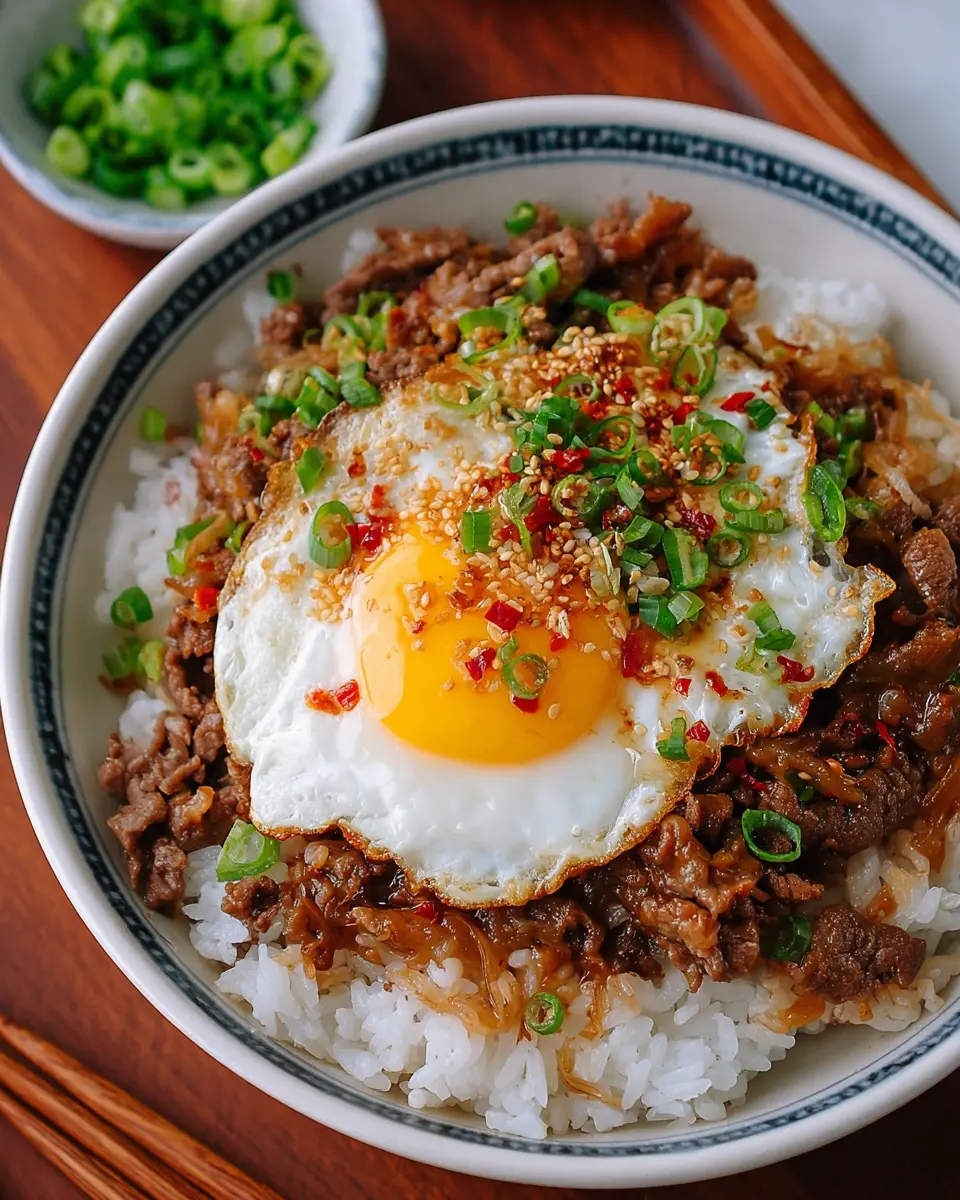
Ingredients for Gyudon
Essential ingredients for the perfect Gyudon
If you’re aiming for a delicious and authentic gyudon recipe, you’ll need a handful of essential ingredients that create that satisfying umami flavor profile. Here’s what you’ll need:
- Neutral oil: (such as vegetable or canola oil) to sauté the onions and beef.
- Onions: 2 medium, very thinly sliced, for sweetness and depth.
- Beef: 1 pound of fatty beef chuck or ribeye, thinly sliced so it cooks quickly and absorbs all those flavors.
- Sugar: Just 2 teaspoons adds a subtle sweetness that balances the savory elements.
- Mirin: 2 tablespoons of this sweet rice wine brings out the umami flavor.
- Soy sauce: 2 tablespoons, a must for that classic salty taste.
- Dashi stock: 1 cup (or beef/chicken stock) to simmer the beef and onions, enriching the dish.
- Eggs: 4, sunny-side up for that luscious finish.
- Cooked white rice: 4 cups of short or medium-grain, forming the perfect base.
- Scallion: To garnish and add freshness.
- Toasted sesame seeds: 2 teaspoons (optional) for crunch.
Optional ingredients for a twist
Want to give your gyudon a personal touch? Try these optional ingredients:
- Kimchi: Adds spice and tang for a vibrant kick.
- Sriracha: A drizzle can elevate the heat factor if you’re in the mood for something zesty.
- Pickled ginger: A refreshing contrast that cuts through the richness of the beef.
By mixing in these seasonal additions, you can make your gyudon unique every time! Whether you’re meal-prepping or serving up a cozy dinner, you can’t go wrong with this dish. Happy cooking!
Preparing Gyudon
Making a delicious bowl of Gyudon at home is an enjoyable experience that brings a little taste of Japan right to your kitchen. Let’s get started on this gyudon recipe that’s quick, flavorful, and perfect for any weeknight dinner!
Gather your ingredients
Before you dive into cooking, it’s essential to have everything at hand. Here’s what you’ll need for this delightful dish:
- Neutral oil (vegetable or canola oil)
- 2 medium onions (very thinly sliced)
- 1 pound very thinly sliced beef (fatty beef chuck or ribeye)
- 2 teaspoons sugar
- 2 tablespoons mirin
- 2 tablespoons soy sauce
- 1 cup dashi stock (or substitute beef/chicken stock)
- 4 eggs
- 4 cups cooked white rice (short grain or medium grain preferred)
- 1 scallion (chopped)
- 2 teaspoons toasted sesame seeds (optional)
Having these ingredients ready and prepped will help streamline your cooking process, letting you focus on perfecting those flavors.
Sauté the onions
Heat a drizzle of neutral oil in a large skillet over medium-high heat. Toss in your thinly sliced onions and let them cook for about 10 minutes. Stir often to ensure even cooking; you're aiming for soft, translucent onions with a touch of caramelization for that sweet flavor boost. Did you know that onions are not just tasty but also packed with antioxidants? The magic really starts as they cook down!
Cook the beef to perfection
Once the onions are beautifully softened, it’s time to add the star of our gyudon recipe: the beef! Introduce the sliced beef to the skillet along with the sugar, cooking until the beef is slightly browned. This step is crucial as it releases all those savory juices that will add depth to your dish. Pour in the mirin, soy sauce, and dashi stock, then bring everything to a simmer. Allow it to cook for about 10-15 minutes until the flavors meld into a silky sauce. Don’t forget to taste for seasoning; a little extra soy sauce can work wonders!
Add sauces and simmer
Stir the mixture gently as it bubbles away. The goal here is to reduce the stock into a thin, flavorful sauce that coats your beef beautifully. This step not only enhances the flavor but helps to create that rich essence characteristic of traditional gyudon.
Fry the eggs for that perfect finish
While the beef simmers, heat another couple of tablespoons of oil in a separate non-stick skillet. Crack the eggs into the skillet and cook them sunny-side up. Aim for runny yolks that will add a luscious creaminess when broken over the rice. If you’re cooking for a crowd, feel free to make the eggs in batches to ensure everyone gets that perfect topping.
Assemble your Gyudon bowls
Now comes the fun part—assembly! Divide the cooked rice among four serving bowls, spoon the simmered beef mixture over the top, and finish with a fried egg on each bowl. For a garnish, sprinkle with chopped scallion and toasted sesame seeds if you're feeling fancy. Voilà! You have a gorgeous gyudon that is not only mouthwatering but also visually appealing.
Enjoy this hearty and comforting dish, perfect for sharing with friends or savoring on a cozy night in. With this gyudon recipe, you’ll find yourself coming back for more!
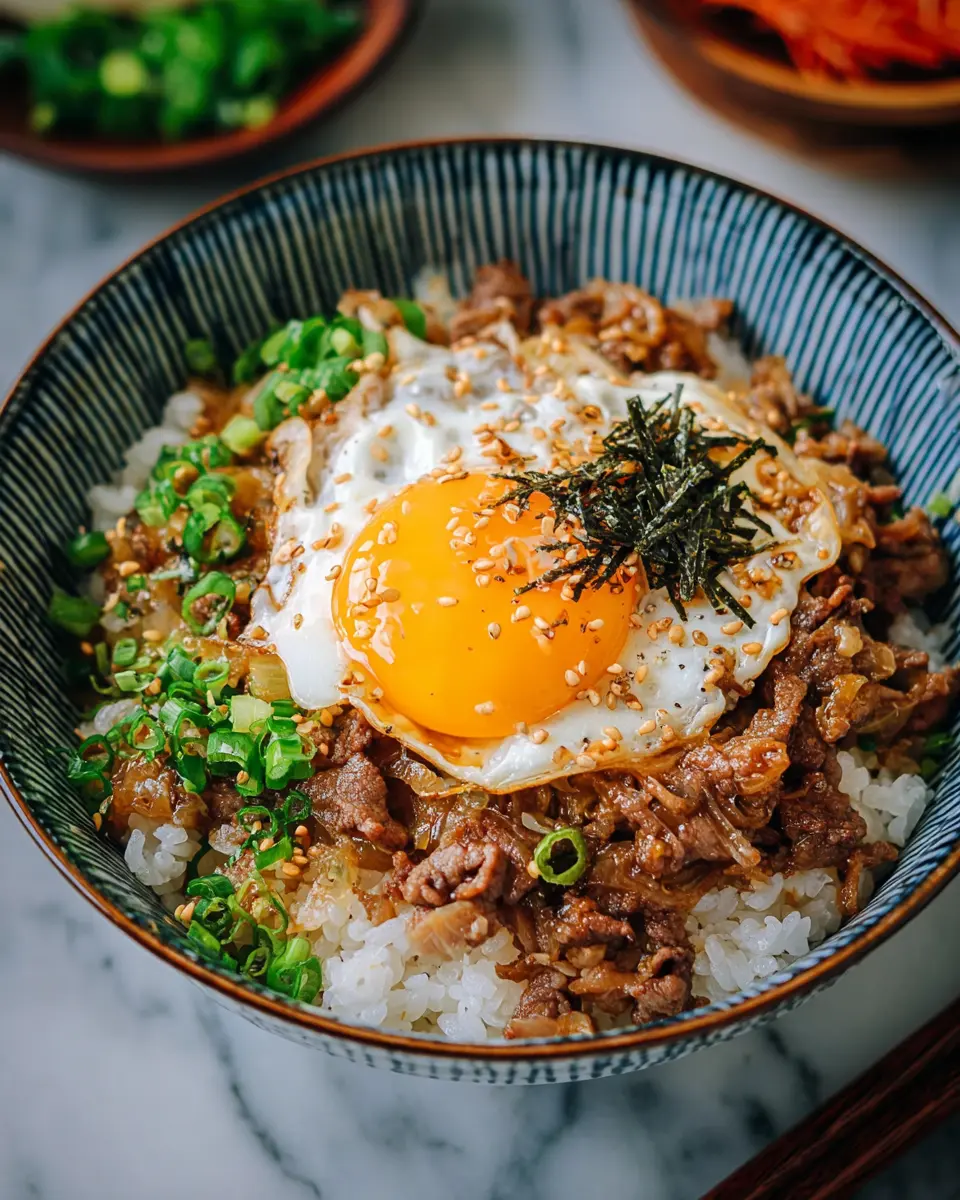
Variations on Gyudon
Vegetarian Gyudon Alternatives
If you're looking to enjoy a delicious gyudon recipe without meat, consider swapping in tofu or a medley of mushrooms as your protein source. You can marinate your tofu in a mixture of soy sauce and mirin before sautéing it until golden brown. For a heartier option, use hearty mushrooms like portobello or shiitake, which provide a fantastic umami flavor.
Spicy Gyudon for Heat Lovers
For those who enjoy a kick, elevate your gyudon with a spicy twist. Simply add chili flakes or a splash of your favorite hot sauce to the beef mixture and let it simmer in. You could also incorporate a dash of spicy miso for depth. This variation not only warms the palate but also makes for an exciting change from traditional flavors. Don't forget to keep a pitcher of cold water nearby!
Mix and match these variations, and you're sure to serve up a delicious bowl that's uniquely yours!
Cooking Notes and Tips for Gyudon
Food Safety Tips
When preparing this gyudon recipe, it's essential to prioritize food safety. Always store raw beef in the refrigerator or freezer, and use it within 3-5 days if refrigerated. Make sure to cook the beef to a safe internal temperature of 145°F. It's also wise to prevent cross-contamination by using separate cutting boards for meat and vegetables.
Ingredient Substitutions
If you're missing some ingredients, don’t worry! You can easily substitute:
- For dashi stock, use beef or chicken stock for a similar flavor.
- Instead of mirin, a splash of apple cider vinegar with a bit of sugar can mimic the sweetness.
- You can swap the beef with thinly sliced chicken or tofu for a lighter version.
Remember, cooking is all about experimentation, so feel free to adjust based on what's in your pantry!
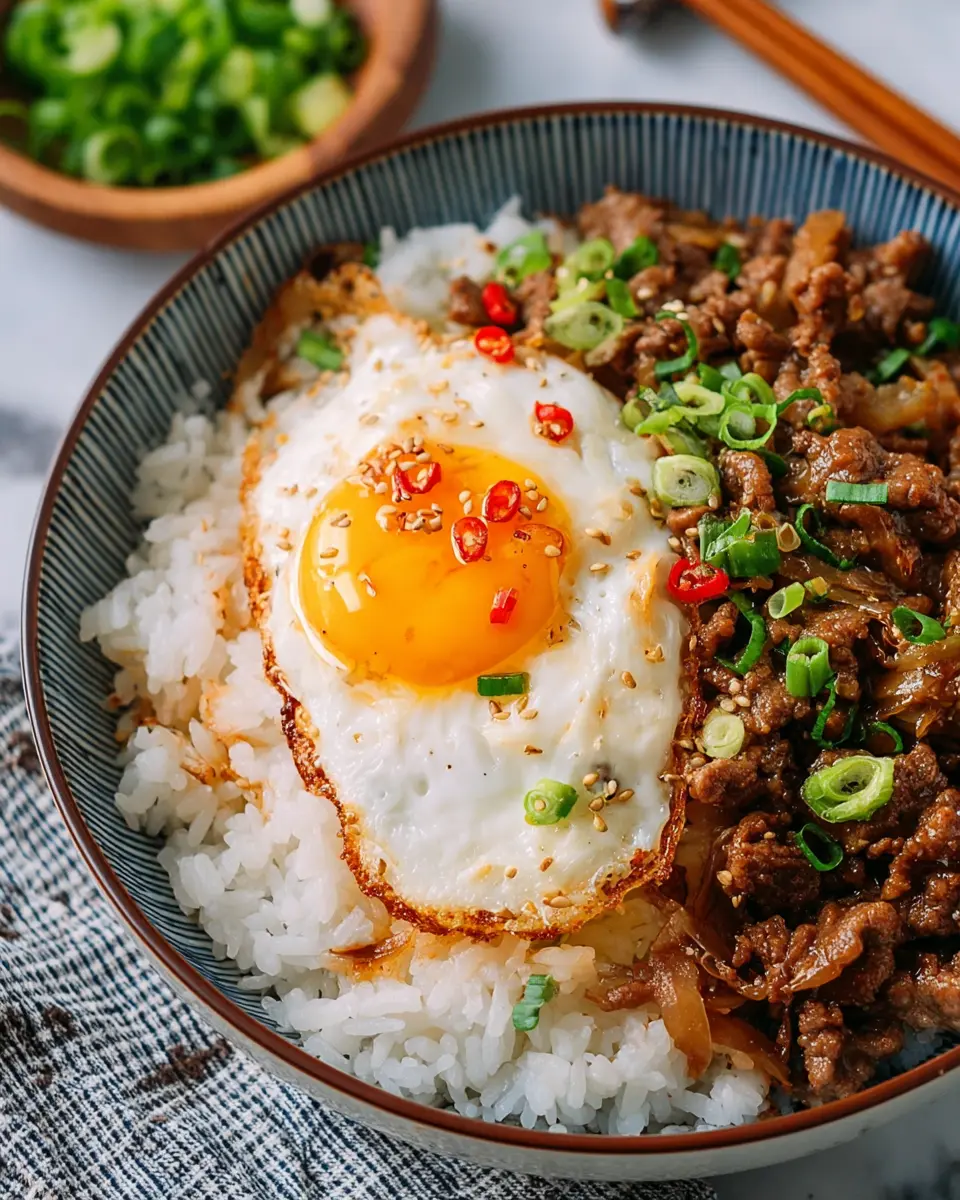
Serving suggestions for Gyudon
Complementary sides and drinks
To enhance your gyudon experience, consider pairing it with simple sides like miso soup, pickled cucumbers, or a light green salad. These options complement the richness of the beef and balance the meal. For drinks, a refreshing green tea or sparkling water with a hint of citrus will cleanse your palate, allowing you to fully enjoy the layers of flavor in this gyudon recipe.
Presentation tips for aesthetic appeal
Presentation is key to making your gyudon truly shine. Serve the beef over a generous mound of rice in a deep bowl, and top it with the sunny-side-up egg, letting the yolk ooze over the beef. Garnish with finely chopped scallions and a sprinkle of toasted sesame seeds for a pop of color and texture. Using vibrant bowls can also enhance visual appeal, turning your meal into a feast for the eyes as well as the stomach!
Time breakdown for Gyudon
Preparation time
Get ready to cook! The preparation for this gyudon recipe takes about 10 minutes. You’ll need time to slice your onions and beef, and gather all the ingredients.
Cooking time
Once you’re prepped, the cooking time is approximately 25-30 minutes. That includes sautéing the onions and simmering the beef until it's perfectly tender.
Total time
In total, you’re looking at about 40 minutes from start to finish! This makes it a fantastic option for a quick yet fulfilling weeknight dinner. Enjoy the delicious, homemade taste of Japanese beef and rice bowls right in your kitchen!
Nutritional Information for Gyudon
Calories per serving
Each serving of this delicious gyudon recipe boasts approximately 598 calories. This makes it a satisfying meal that keeps you energized through the day.
Protein content
Packed with about 36 grams of protein, gyudon is an excellent choice for those looking to build muscle or maintain a healthy diet. The beef provides high-quality protein to support your fitness goals.
Health benefits
Beyond its tasty profile, gyudon offers several health benefits. The thinly sliced beef delivers essential nutrients like iron and B vitamins, while the eggs are rich in protein and healthy fats. Plus, the inclusion of onions adds antioxidants, contributing to overall wellness. Curious about how to enhance the dish further? Consider reading about the benefits of soy sauce.
FAQs about Gyudon Recipe
Can I make Gyudon ahead of time?
Absolutely, you can prep your gyudon recipe a day in advance! Simply cook the beef and onion mixture, then store it in the refrigerator. When you’re ready to eat, just reheat it, prepare your rice, and top it off with a sunny-side-up egg. For meal prepping, it’s a fantastic time-saver!
What beef cuts work best for Gyudon?
For authentic flavor and tenderness, fatty beef cuts like chuck or ribeye work wonders. You want a cut that’s thinly sliced; this allows for quick cooking and meltingly delicious bites. If you can’t find these cuts, any tender steak will do, but avoid lean cuts as they can become tough.
How can I adjust the flavors?
If you’re looking to customize your gyudon recipe, adjusting flavors is simple! Consider adding more soy sauce for a saltier punch or extra mirin for a sweeter taste. A splash of sake can also enhance the umami profile. Don’t hesitate to experiment to fit your palate!
For more tips on flavor adjustments, check out this article on flavor balancing.
Conclusion on Gyudon Recipe
Embracing homemade goodness
In this gyudon recipe, you can truly enjoy the balance of tender beef and fluffy rice, all brought together in a delicious bowl. Making this dish at home not only elevates your culinary skills but also fills your kitchen with warmth and joy. Give it a try and savor the experience!
Gyudon (Japanese Beef & Rice Bowls)
Equipment
- large skillet
- Cast Iron Skillet
- non-stick skillet
Ingredients
- 2 tablespoons neutral oil (such as vegetable or canola oil)
- 2 medium onions (very thinly sliced)
- 1 pound very thinly sliced beef (fatty beef chuck or ribeye)
- 2 teaspoons sugar
- 2 tablespoons mirin
- 2 tablespoons soy sauce
- 1 cup dashi stock (can also substitute beef or chicken stock)
- 4 cups cooked white rice (short grain or medium grain preferred)
- 2 teaspoons toasted sesame seeds (optional)
Instructions
- Heat the neutral oil in a large skillet over medium high heat, and cook the sliced onions for about 10 minutes, stirring often.
- Add the beef and sugar, and cook until the beef is slightly browned. Add the mirin, soy sauce, and stock. Bring to a simmer, and cook for about 10-15 minutes to reduce the stock into a thin sauce. Taste for seasoning, and add a little more soy sauce if needed.
- Meanwhile, heat another couple tablespoons of oil in a cast iron or non-stick skillet. Cook the eggs sunny-side up. You can cook them in batches if needed. The yolks should still be runny!
- When the beef is done simmering, divide the rice among serving bowls, and top with the beef and an egg for each bowl. Garnish with chopped scallion and toasted sesame seeds, if using.


Leave a Reply